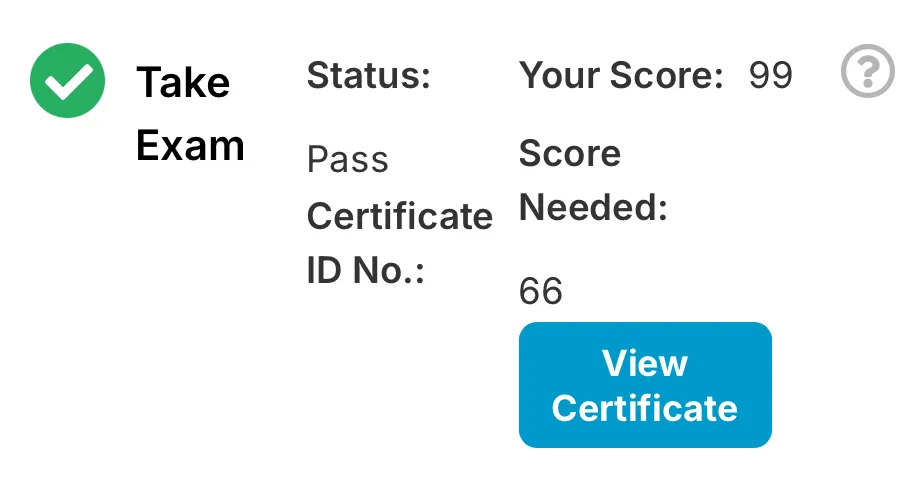
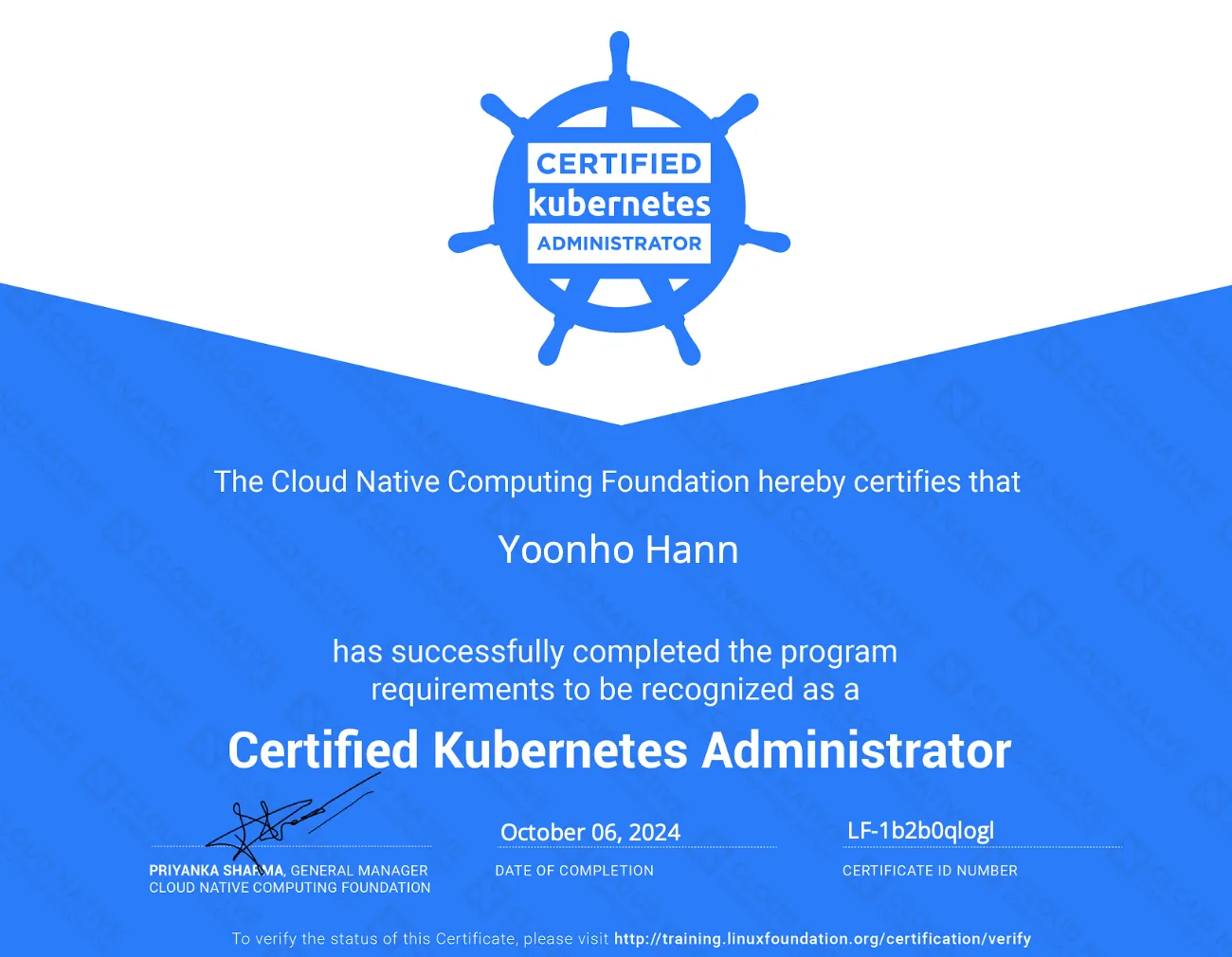
Preparing for CKA in 2 Months with kubectl
Translated from the original Velog post: kubectl 2달이면 CKA 99점을 받는다
This post summarizes a roughly two-month CKA preparation process using kubectl.
The actual exam workflow used alias k=kubectl heavily.
Starting Point
The starting point was basic Kubernetes awareness: Kubernetes is a container orchestration system. Concepts such as Minikube, MicroK8s, EKS, clusters, and nodes were not yet clear in detail.
The CKA was completed less than three months after first using kubectl.
The following sections summarize the preparation flow that made that possible.
Preparation Timeline
Study started on August 1, and the Kubernetes preparation process followed this timeline:
- 2 weeks: completed and summarized Mumshad Mannambeth’s Kubernetes course
- 3 weeks: worked on a project using EKS
- 3 weeks: reviewed the course again and solved practice problems
In total, it took about 8 to 9 weeks of studying and using Kubernetes. All of that time contributed to CKA preparation.
Course Study
The main course was the well-known Udemy course by Mumshad Mannambeth. It was reviewed about twice.
The course became more useful after hands-on Kubernetes usage. On the first pass, it introduced the concepts. After using Kubernetes directly, the second pass helped organize and clarify those concepts.
About a week before the exam, an additional free Korean lecture about preparing for Kubernetes certifications was used to understand the exam format and strategy. This helped more with understanding the exam itself than with solving specific problems.
Practice Problems
Mumshad’s Lightning Lab and Mock Exams 1, 2, and 3 were each solved at least three times. The goal was to verify that the concepts behind each problem were understood instead of memorizing answers.
Cluster upgrade problems were especially difficult, so the node upgrade problem from the Lightning Lab was repeated until the flow became clear.
The exact questions are unlikely to appear on the exam. Practice until each problem can be solved with the official documentation.
After that, additional problem types were reviewed through blog posts and public CKA review materials. Many CKA reviews mention that similar types of questions appear repeatedly. Searching for CKA practice questions and using them to find weak areas was useful.
One week before the exam, killer.sh was used once to become familiar with the exam environment.
The score was much lower than the actual exam score, but that was useful because it exposed weak areas and made the terminal environment feel more familiar.
It also helped practice copy and paste with Ctrl+Shift+C and Ctrl+Shift+V.
During practice, I concentrated on:
- Practice finding the right official documentation quickly
- Practice finding useful sample files and adapting them
- Identify concepts or commands that repeatedly cause mistakes
Repeated problem solving also helped build the right exam mindset.

Hands-on Usage
I wanted to pass the CKA and use Kubernetes in a project. For three weeks, Kubernetes was used directly through EKS.
Hands-on usage has clear tradeoffs. The benefit is that project deadlines create strong motivation, and repeated usage makes Kubernetes commands, manifests, and operational concepts more familiar. It also exposes practical questions that do not appear in exam-only study.
However, if the only goal is certification, project-based learning can require extra time and effort. Using Kubernetes in a project without enough prior understanding can also make the project harder to complete reliably.
Exam Environment
For exam rules and environment details, refer to the Linux Foundation’s official instructions for CKA and CKAD.
It is also useful to practice with killer.sh and complete the tutorial test provided in the training portal before the exam.
The exam environment checks are strict. Bookshelves, books, calendars, wall items, and similar objects can become issues during check-in. If taking the exam at home, prepare the room carefully before check-in. A clean study room with minimal objects can also be a good option.
Network stability matters. If possible, use a wired network instead of Wi-Fi.
Exam Review
The CKA is a hands-on exam, which suits Kubernetes beginners. Its documentation access and flexible rescheduling and cancellation policy support practical Kubernetes learning.
The exam fee and remote exam environment are the main drawbacks.
A strong CKA score can indicate practical Kubernetes skills. CKAD and CKS are possible next steps, depending on the intended learning path.